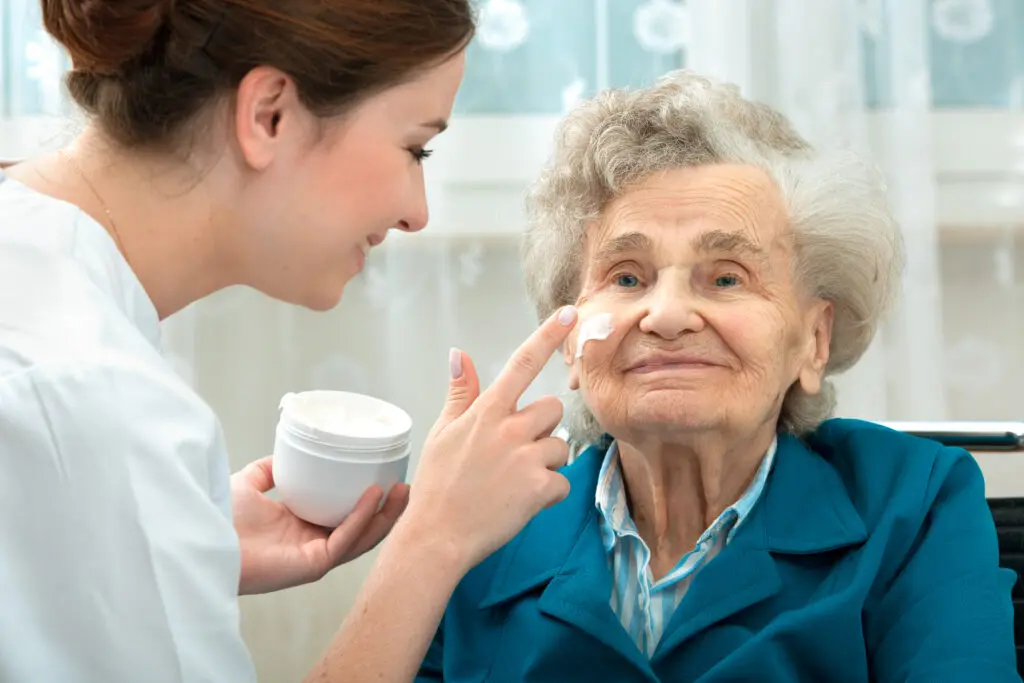
When Parkinson’s Gets Under Your Skin: Understanding Skin Changes and How to Care for Them
Parkinson’s disease is best known for movement symptoms such as tremor, slowness and stiffness. But Parkinson’s can affect much more than movement. Changes in the skin, sweating and sebaceous glands can also occur and may sometimes have a considerable impact on comfort and quality of life.
Common skin problems in Parkinson’s disease include oily or flaky skin, dryness and changes in sweating. Parkinson’s disease is also associated with certain dermatological conditions, including seborrheic dermatitis and melanoma. Some Parkinson’s treatments can cause additional skin reactions.
Why can Parkinson’s disease affect the skin?
The skin is closely connected to the nervous system. Parkinson’s affects not only movement but also the autonomic nervous system, which helps regulate bodily functions including sweating.
As a result, some people with Parkinson’s experience excessive or reduced sweating as well as oily, flaky or dry skin.
Other skin problems may be associated with Parkinson’s itself, while others can occur as a result of Parkinson’s treatments. A major dermatological review therefore distinguishes between non-treatment-related skin disorders and skin problems associated with Parkinson’s therapies.
1. Oily and flaky skin: seborrheic dermatitis
Seborrheic dermatitis is particularly associated with Parkinson’s disease. Typical areas include the scalp, eyebrows, forehead and sides of the nose.
Possible signs include:
⚪ oily or flanky skin
⚪ White or yellowish scales
⚪ itching
⚪ redness
⚪ chronically irritated areas
Recent research continues to confirm a strong association between Parkinson’s disease and seborrheic dermatitis.
What can help?
Gentle skin cleansing is important. Products that excessively dry or irritate the skin should be avoided.
For dandruff or more pronounced seborrheic dermatitis, medicated shampoos or topical treatments may be useful. The Parkinson’s Foundation lists ingredients including selenium sulfide, salicylic acid and zinc, while prescription treatment can include ketoconazole or corticosteroids in more severe cases.
If symptoms persist or become severe, consult a healthcare professional or dermatologist.
2. Dry and sensitive skin
Some people with Parkinson’s experience very dry or sensitive skin.
A simple skin-care routine can help protect the skin barrier:
⚪ use gentle cleansing products
⚪ avoid very hot showers
⚪ moisturize regularly
⚪ choose fragrance-free products if the skin is sensitive
⚪ avoid unnecessary rubbing or friction
Moisturizers and hair conditioners are specifically recommended by the Parkinson’s Foundation for people experiencing dry skin.
3. Excessive sweating and reduced sweating
Changes in sweating are common in Parkinson’s disease.
Some people sweat excessively, known as hyperhidrosis, while others may sweat less than usual. Excessive sweating can affect the hands, feet or upper body and may also occur at night.
Importantly, sweating may sometimes be related to fluctuations in Parkinson’s symptoms. The Parkinson’s Foundation notes that excessive sweating can occur as a “wearing-off” symptom in people experiencing fluctuations in the effect of carbidopa/levodopa.
Practical tips
⚪ choose light, breathable clothing
⚪ change damp clothing when necessary
⚪ keep skin folds clean and dry
⚪ maintain a comfortable room temperature
If sweating appears during wearing-off periods or has recently changed significantly, discuss it with the treating Parkinson’s team because medication timing or other factors may need to be reviewed.
4. Skin problems related to Parkinson’s medication and treatment
Not every skin problem is caused directly by Parkinson’s disease.
Some are associated with Parkinson’s treatments or their delivery systems. Reviews describe skin-related issues associated with therapies including dopamine agonist patches, apomorphine infusion, intestinal levodopa therapies and deep brain stimulation.
With patch treatments, local redness or irritation can occur. Rotating application sites according to the product instructions and monitoring irritated areas can help reduce repeated stress to the same area.
During intestinal levodopa therapy, skin irritation may occur around the PEG-J tube insertion site. Redness, tenderness, moisture, or irritation should be monitored carefully. Good daily hygiene and keeping the area clean and dry are important, while persistent redness, pain, swelling, discharge, or other signs of infection should be discussed with the healthcare team.
5. Apomorphine infusion and skin nodules
For people receiving continuous subcutaneous apomorphine infusion, local skin reactions are particularly important.
One of the most common local reactions is the development of subcutaneous nodules or infusion-site reactions.
The reassuring message is:
A skin nodule definitely does not automatically mean that apomorphine therapy has to be stopped.
Expert recommendations indicate that many infusion-site reactions can be managed conservatively and do not prevent successful continuation of treatment.
The topic of nodules and skin care has already been covered in other blog articles. Furthermore, our nurses in all our countries are highly trained in skin care related to apomorphine therapy and know a solution for every apomorphine-induced skin problem. Therefore, this article only touches on the topic of nodules.
However, I would like to recommend that all patients discuss their nodules with their nurse and seek professional advice. If you, as a nurse, are unsure or need advice, you can also contact us directly. We are happy to provide guidance.
Good infusion-site care matters
Depending on the prescribed system and local clinical guidance, attention should be paid to:
⚪ regular inspection of infusion sites
⚪ systematic rotation of sites
⚪ avoiding repeated use of irritated areas
⚪ using the right catheter and correct catheter placement and fixation
⚪ recognizing redness, itching, swelling, induration or drainage early
⚪ discussing persistent reactions with the Parkinson’s nurse or treating physician
6. Parkinson’s disease and melanoma
Research has consistently identified an association between Parkinson’s disease and melanoma, although the reasons behind this relationship are not fully understood.
Importantly, current evidence does not support the earlier assumption that levodopa itself causes the increased melanoma risk.
Protect your skin
The Parkinson’s Foundation recommends sun protection and annual dermatological skin examinations.
In everyday life:
⚪ protect the skin from excessive sun exposure
⚪ use appropriate sunscreen
⚪ monitor existing moles
⚪ pay attention to new or changing skin lesions
⚪ attend regular skin checks
Any suspicious or changing skin lesion should be evaluated by a healthcare professional.
7. Other skin conditions associated with Parkinson’s disease
Research has also identified associations between Parkinson’s disease and other dermatological conditions, particularly rosacea and bullous pemphigoid.
This does not mean that everyone with Parkinson’s will develop these conditions. However, persistent facial redness, new unexplained rashes or blisters should not simply be assumed to be “part of Parkinson’s.”
They deserve medical assessment.
When should you talk to your doctor or Parkinson’s nurse?
Contact your healthcare team if you notice:
⚪ a new or rapidly changing skin lesion
⚪ persistent or spreading redness
⚪ pronounced swelling
⚪ increasing pain
⚪ drainage from an infusion site
⚪ extensive blistering
⚪ persistent itching or rash
⚪ a skin problem that does not improve
⚪ an infusion-site reaction accompanied by systemic symptoms
For apomorphine infusion-site reactions specifically, expert recommendations highlight persistent, enlarging reactions and reactions associated with systemic symptoms as reasons to contact the treating clinician or Parkinson’s Nurse.
Conclusion:
Parkinson’s disease can affect more than movement. Skin changes can be part of the non-motor picture of Parkinson’s and can also arise in connection with treatment.
Oily or flaky skin, dryness and altered sweating are among the common problems. Parkinson’s is also associated with conditions such as seborrheic dermatitis and melanoma, while therapies including patches and continuous subcutaneous apomorphine can cause local skin reactions.
The key is not to ignore skin changes.
Gentle skin care, regular observation, appropriate rotation of infusion or application sites, sun protection and early communication with the healthcare team can help identify and manage problems before they become more troublesome.
For people using continuous subcutaneous apomorphine, good skin and infusion-site management is an important part of successful long-term therapy.
Helpful links:
🔗 Skin changes_Parkinson’s Foundation
🔗 Parkinson’s disease and skin_PubMed
🔗 The association of seborrheic dermatitis and Parkinson’s disease: A cross-sectional study_JAAD
🔗Protocol for Skin Nodule Management Related to Continuous Subcutaneous Infusion in Parkinson Disease_NeurologyLive
🔗The Skinny on Skin and Bone Health_Parkinson’s Foundation
🔗Parkinson’s Disease and Its Dermatological Associations: Is Your Skin Whispering You a Diagnosis?_PubMed