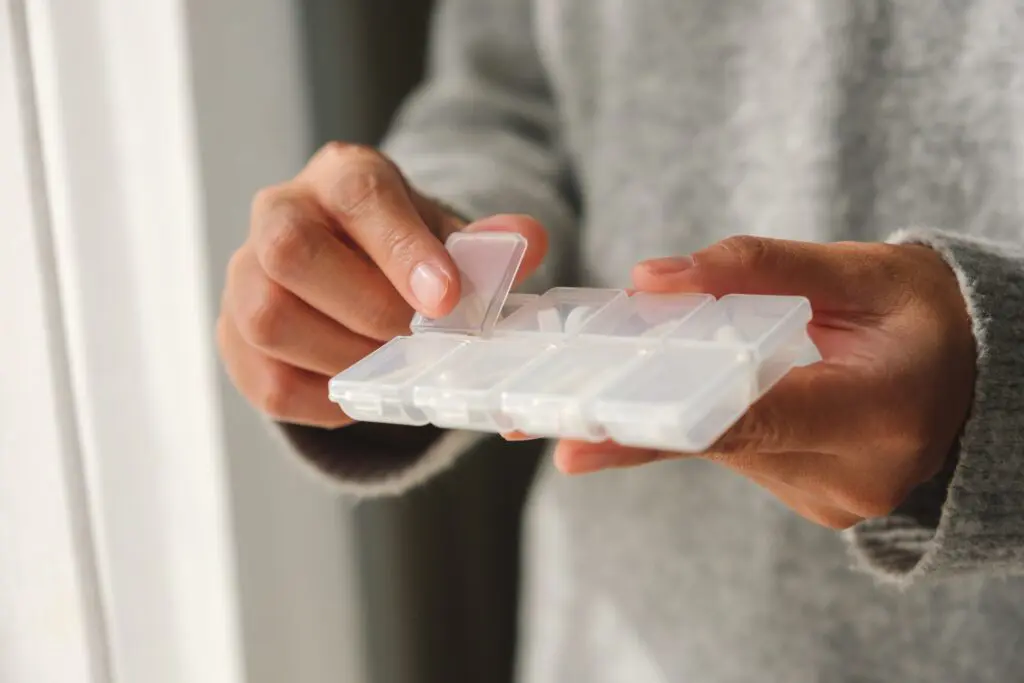
For many people living with Parkinson’s disease, taking medication is far more complex than simply swallowing a tablet. As the disease progresses, treatment plans often become increasingly sophisticated, requiring multiple doses at specific times throughout the day. Missing a dose, taking medication too late, or combining it incorrectly with meals can significantly affect symptom control. Healthcare professionals can improve symptom stability and quality of life by supporting Parkinson medication adherence. Digital tools and medication dispensers can help patients follow their medication schedule more reliably.
Why Timing Matters so much in Parkinson’s Disease
The effectiveness of Parkinson’s medication depends not only on the medication itself, but also on precise timing. Many treatments require carefully planned dosing intervals throughout the day to maintain stable dopamine levels and ensure consistent symptom control.
Even relatively small deviations from the prescribed schedule can reduce effectiveness and lead to noticeable symptom fluctuations.
Consequences of delayed or missed doses may include:
⚪ Increased tremor, stiffness, or slowness of movement
⚪ Longer and more frequent “off” periods
⚪ Reduced mobility and independence
⚪ Worsening of non-motor symptoms such as fatigue, anxiety, or cognitive difficulties
Many of my patients find it difficult to stay on schedule while coordinating medications with meals, appointments, and everyday life.
Why Parkinson’s Medication Management is Particularly Challenging
Parkinson’s disease requires particularly precise medication management compared with many other chronic conditions. Most of my Apomorphine pump patients also take L-dopa tablets several times a day in addition to their continuous therapy. Despite their proven effectiveness, levodopa-based therapies Levodopa-based therapies have several well-recognised limitations, including:
⚪ Narrow therapeutic windows
⚪ Short half-lives
⚪ Variable absorption influenced by food intake, especially protein-rich meals
As a result, treatment success depends not only on the medication itself but also on precise dose timing.
Following a structured Parkinson medication schedule is essential for maintaining stable symptom control and reducing motor fluctuations throughout the day. Many patients follow a complex Parkinson medication schedule involving 5 – 8 daily doses at specific times. Managing this schedule alongside meals, appointments, travel, and other daily activities can be difficult.
In addition, Parkinson’s symptoms such as tremor, bradykinesia, fatigue, cognitive impairment, apathy, or depression may further complicate medication management. These factors can make it difficult to remember doses or follow a prescribed schedule accurately.
Taking Parkinson medication on time is essential for maintaining symptom control and treatment effectiveness. Even small delays or missed doses can increase symptom fluctuations and prolong “off” periods. Medication reminder apps, pill organisers, and electronic dispensers can help patients stay on track and support long-term Parkinson medication adherence.
Rather than controlling patients, these tools help create structure, support independence, and build confidence in managing treatment.
Lessons from Daily Clinical Practice: Supporting Parkinson Medication Adherence
While supporting patients undergoing Apomorphine pump therapy adjustments, I have gained valuable insight into how individuals manage their oral Parkinson’s medication in everyday life and the challenges associated with maintaining Parkinson medication adherence.
Many patients describe similar difficulties and face similar challenges: meals can interfere with medication timing, doses may be forgotten, and complex treatment regimens often become more difficult to manage over time. At the same time, patients often develop remarkably practical solutions that fit their personal routines and help them maintain consistent medication adherence.
As a healthcare professional, I am often impressed by how confidently many older patients embrace digital tools when they are easy to use and genuinely helpful. These tools can play an important role in supporting Parkinson medication adherence and reducing the burden of complex dosing schedules.
Because there is no universal solution, it is often worthwhile to trial different approaches until the patient finds a system that fits naturally into their daily life and supports long-term adherence to their prescribed treatment plan.
In practice, the following strategies have proven particularly helpful:
⚪ Set up the chosen tool together with the patient rather than simply recommending it
⚪ Introduce only one new app or system at a time
⚪ Align medication reminders with the patient’s actual daily routine
⚪ Review regularly whether the system remains useful and manageable
⚪ Consider pill organisers or pharmacist-prepared blister packs early when cognitive difficulties are emerging
Digital Support: Medication Apps for Parkinson’s Disease
Medication reminder apps can provide valuable support, particularly for people in the early and moderate stages of Parkinson’s disease. Many of my patients find that these tools help them stay on schedule and improve Parkinson medication adherence. Several apps are available, each offering different features and benefits. MyTherapy® provides reliable medication reminders, prescription tracking, and adherence monitoring. The Move App, developed within the German Parkinson’s community, combines medication reminders with exercises, educational content, and information on assistive devices. Medisafe® offers medication tracking, appointment management, and health monitoring through a user-friendly interface. In Switzerland, the SwissParkinson App was developed in collaboration with neurological centres and includes medication scheduling, reminder functions, symptom tracking, and a detailed patient diary. While availability may vary between countries, comparable apps can usually be found locally, making digital support an increasingly valuable part of Parkinson’s medication management.
Depending on which country you live in, certain apps might not be available everywhere. But I’m sure, in most countries, there are comparable apps available. I’d appreciate any recommendations you might have so I can add them to my knowledge base. Just send me a message 😊.
A Helpful Complement – Not a Replacement
Apps can never replace the personal support of medical professionals, family members, or caregivers. However, they can be a valuable addition to medication management, especially when combined with practical dosing aids. While apps are often most useful early on, medication dispensers can help at any stage of Parkinson’s.
Medication Dispensers: Practical Solutions for Everyday Life
While medication apps can be a valuable tool for supporting adherence, they are only one part of the solution. In everyday practice, many patients benefit from combining digital reminders with a structured system for organising their medication. This is where medication dispensers and pill organisers can be particularly helpful. By providing a clear overview of daily doses and dosing times, they help simplify medication management and reduce the risk of missed or incorrect doses.
The Anabox® daily pill organiser is a practical solution for people with Parkinson’s disease who need to take medication several times throughout the day. Its user-friendly design includes large compartments that are easy to grip and open, making medication management simpler for people with impaired hand function. Clear labelling of the individual compartments helps patients quickly identify the correct dosing time, while the robust design makes it suitable for everyday use. Its modular design also allows the system to accommodate more complex medication schedules. For patients who wish to maintain independence while managing multiple daily medication doses, the Anabox® organiser offers a simple, reliable, and user-friendly option.
Pill dispensers with alarm functions offer an additional layer of support by combining medication storage with built-in reminder systems. These devices use audible alerts, visual signals, or both to notify patients when it is time to take their medication, helping to reduce the risk of missed doses and improve adherence to complex treatment schedules. They can be particularly useful for individuals who occasionally forget medication times or who would benefit from a structured reminder alongside a physical medication organiser.
Many models are easy to use, requiring only simple operation while providing a clear and organised way to manage daily medication. By bringing together dose organisation and timely reminders, these dispensers can help patients feel more confident and independent in managing their treatment.
Choosing the Right System for Parkinson’s Disease
However, not all devices are suitable for Parkinson’s disease and not every medication organiser is suitable for Parkinson’s patients. Standard pill boxes are often too simplistic for more complex treatment regimens. Most Parkinson’s patients need medication at multiple and sometimes very specific intervals throughout the day. Hence, it is important to ensure that any dispenser can accommodate the individual treatment schedule. Before choosing a device, healthcare professionals, patients, and caregivers should carefully assess whether its functionality matches the complexity of the prescribed regimen.
When recommending a system, healthcare professionals should consider the following criteria:
⚪ Accommodates at least 6 – 8 medication times per day
⚪ Easy to open with limited hand strength or dexterity
⚪ Large, highly visible labels
⚪ Uses specific dosing times rather than broad categories such as “morning” or “evening”
⚪ Reflects the patient’s actual daily routine
⚪ Can be combined easily with an app or reminder system
My practical tip: Patients should consult their physician or Parkinson’s nurse about suitable medication dispensers, as some devices may be available through prescription.
My conclusion:
For people living with Parkinson’s disease, medication often determines how predictable and stable their day will be. A well-chosen app or medication dispenser is therefore much more than a practical accessory – it is a tool that supports independence, confidence, adherence to the medication plan, and treatment success.
The benefits can be substantial:
⚪ Fewer missed or duplicated doses
⚪ More consistent medication levels
⚪ Reduce motor fluctuations
⚪ Greater independence in daily life
⚪ Less burden on family members and caregivers
⚪ Improved confidence in managing treatment
Ultimately, the principle is simple:
The support tool should be simple and intuitive to use. Taking medication should also become safer and easier to integrate into everyday life.
When tailored to an individual’s needs, digital reminders and medication dispensers can turn a complex treatment schedule into a manageable routine, allowing patients to focus less on their medication and more on living their lives.
Further Links:
🔗 Managing drug treatments for Parkinson’s I Parkinson’s UK
🔗 Parkinson’s Symptoms I Parkinson’s UK
🔗 Pill dispenser with alarm – reminder aids for taking medication